Introduction
Mastering car seat leather upholstery repair, such as evaluating professional automotive trim shop pricing ranging from $150 to $300 for mobile interior spot repairs and crack filling to $350 to $750 for single panel replacements and $800 to $2,000+ for full front seat reupholstery across the United States, combines targeted cabin restoration with smart household budgeting. Navigating professional leather restoration choices, such as balancing proper grain-matching techniques and high-grade cowhide sourcing against unbudgeted color mismatching or bolster foam collapse risks, ensures you protect your personal finances from expensive full-interior overhauls while achieving showroom-quality elegance.
Whether you are reviewing specialized stitching workflows, leather conditioning protocols, or following structured itemized repair roadmaps, understanding expert automotive trim specialist standards allows you to execute an informed operational strategy that keeps your vehicle’s interior looking immaculate on U.S. roadways while preserving its overall market resale value.
Key Factors When Evaluating Leather Upholstery Damage
Severe leather degradation goes beyond minor surface scuffs and presents through major structural failures. Sticking strictly to structured car seat leather upholstery repair guidelines safeguards your investment and protects precision interior components.
Blown Side Bolster Seams: Blown-out side bolster seams where leather pulls away from factory stitching lines under body weight.
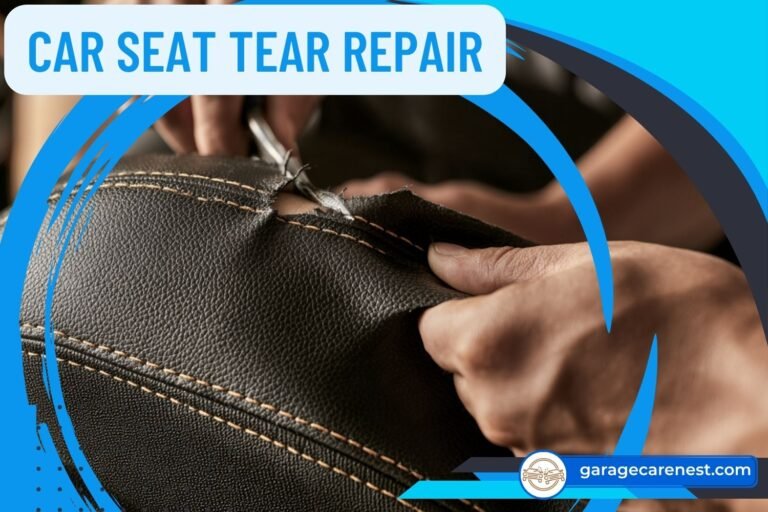
Extensive Rips & Missing Hides: Large tears, rips, and missing leather sections exposing white backing cloth or crumbling foam padding.
Severe Hide Crazing & Cracking: Deep, wide-spread leather cracking and crumbling that cannot be held together with liquid filler compounds.
Financial Planning: Expected Price Ranges and Value Metrics
U.S. automotive trim shop pricing varies based on shop reputation, vehicle luxury tier, and extent of restoration work. Comparing different service delivery methods helps you choose options that fit both your budget and your vehicle preservation goals.
1. Mobile Interior Spot Repair ($150 – $300): Surface crack and scuff restoration taking 2 to 3 hours.
2. Professional Trim Shop Single Panel ($350 – $750 per seat): Replacing individual torn or damaged leather panels taking 1 to 2 days.
3. Full Front Leather Seat Reupholstery ($800 – $2,000+ per pair): Complete foam rebuilding and new hide installation taking 2 to 4 days.
4. OEM Matching Leather Hides ($150 – $400 per hide): Purchasing factory-matched perforated or smooth genuine leather panels for custom replacement.
Safety Assessment & Upholstery Repair Risks
Evaluating financial security and safety when handling car seat leather upholstery repair assessments involves understanding what limits trim shop restorations and avoiding deferred maintenance risks:
Monitor: Cosmetic leather cracks, surface scuffs, and minor bolster wear on standard seats with no mechanical or structural risk.
Service Soon: Severe leather seam splits located directly over side-impact airbag modules embedded in seat bolsters; damaged upholstery stitching can impede proper airbag deployment.
Urgent Repair: Collapsed seat foam or loose mounting tracks causing the driver seat to shift during braking or cornering.
Stop Immediately / Safety Hazard: The risk level for ignoring advanced leather upholstery damage is rapid cabin degradation; unaddressed bolster blowouts widen under every passenger, eventually destroying internal foam blocks and seat frames.
Adhering to strict safety standards and maintaining secure financial planning practices prevents unexpected component failures and protects drivers across every U.S. community.
Material and Build Quality Comparison Guide
Professional automotive upholstery tools, purposes, and estimated U.S. values are outlined in the structured matrix below.
| Professional Tool / Equipment | Purpose in Upholstery Repair | Estimated U.S. Value / Cost & Scope |
| Industrial Walking-Foot Sewing Machine | Heavy-duty sewing machine capable of stitching thick automotive leather hides and nylon threads | $1,200 – $3,500 (Shop Asset). |
| Hog Ring Pliers & Hog Rings | Secures upholstery covers tightly to internal seat frame wire grids | $20 – $40. |
| OEM Matching Leather Hides | Factory-matched perforated or smooth genuine leather panels for custom replacement | $150 – $400 per hide. |
| High-Density Polyurethane Foam Slab | Replaces collapsed seat cushion padding during upholstery rebuilds | $40 – $90. |
Simple Step-by-Step Installation Safety Rules
When professional upholsterers disassemble seats and work with industrial machinery, strict safety protocols apply. Always disconnect the vehicle negative battery terminal and disable ignition before removing seats equipped with side-impact airbags. Use protective eyewear and industrial dust masks when trimming dense high-density foam blocks. Handle industrial sewing machines and pneumatic staple guns with extreme care. Always consult your official handbook for exact manufacturer specifications.
1. Preparation, Documentation & Airbag Safety
Consult Official Manufacturer Specifications: Always consult your official vehicle handbook, service manual, or SRS (Supplemental Restraint System) wiring diagrams to confirm manufacturer specifications and airbag module locations.
Park in a Safe Workspace: Position your vehicle on a flat, stable surface, engage the electronic parking brake firmly, switch off the ignition, and remove the key or fob.
Disconnect the Negative Battery Terminal: Always disconnect the vehicle’s negative battery terminal and wait a minimum of 10 to 15 minutes to allow system capacitors to discharge completely before removing or disconnecting seats equipped with side-impact airbags or seatbelt pretensioners to prevent accidental deployment.
Verification: Confirm that the instrument cluster is completely unpowered and no warning lights are active before touching any seat wiring harness connectors.
2. Personal Protection & Equipment Safety
Wear Protective Eyewear: Always wear protective safety glasses or goggles to shield your eyes from debris, staple wire fragments, and flying particles when tearing down old upholstery.
Use Industrial Dust Masks: Wear an N95 or particulate dust mask when cutting, shaping, or trimming dense high-density foam blocks to avoid inhaling irritating foam dust and microscopic fibers.
Handle Industrial Machinery with Extreme Care: Operate industrial sewing machines, heavy-duty shears, and pneumatic staple guns with strict attention to hand placement, keeping fingers clear of needles and firing paths.
Verification: Ensure your PPE is securely fitted and pneumatic air pressure lines are properly regulated before operating staple guns or sewing equipment.
3. Reassembly, Record-Keeping & Final Verification
Reconnect Power and Verify Systems: After reinstalling seats, torque mounting bolts to factory specifications, plug in all wiring harnesses securely, reconnect the negative battery terminal, and verify that no SRS airbag warning lights remain illuminated on the dashboard.
Organize Service Records: Keep itemized receipts, fabric notes, and repair logs neatly filed in your vehicle binder or digital maintenance log.
Perform a Final Safety Check: Clean the workspace of loose pins, staples, and tools, and test seat adjustment tracks and seatbelt latches to ensure full mechanical and structural integrity before normal driving.
Essential Tools Required for Financial and Maintenance Tracking
Proper maintenance tracking and financial scheduling require basic planning tools, personal protective equipment, and basic digital tools. Essential tools for managing car seat leather upholstery repair projects include industrial walking-foot sewing machines, hog ring pliers, pneumatic upholstery staple guns, pH-balanced leather cleaners, digital tracking apps, smartphone calendars, spreadsheet templates, vehicle owner’s manuals, physical service binders, and safety glasses.
Service Duration Planning: How Long Does It Take for Servicing?
For U.S. vehicle owners balancing busy daily commitments, knowing how long service appointments take is critical for planning schedules. Whether you are performing mobile spot repairs or professional trim shop rebuilds, turnaround times vary widely based on the specific repair task and mechanical complexity. Mobile interior spot repairs take 2 to 3 hours, professional trim shop single-panel replacements take 1 to 2 days, and full front leather seat reupholstering requires 2 to 4 days. Understanding these timeframes helps owners manage expectations and ensure routine servicing receives proper attention.
Not all maintenance and planning tasks are created equal. While mobile spot fixes are streamlined for rapid execution, full seat rebuilding requires extensive cover stripping and sewing labor.
1. Mobile Spot Repair (2 to 3 Hours): Fixing surface cracks and scuffs on-site at your home or office.
2. Single Panel Replacement (1 to 2 Days): Stripping seats, rebuilding foam, sewing custom leather panels, and reinstalling covers.
3. Full Front Seat Reupholstery (2 to 4 Days): Comprehensive foam replacement and new hide installation across both front seats.
Service Duration Matrix
Review typical upholstery service levels, estimated U.S. costs, and turnaround times across professional providers.
| Upholstery Service Level | Estimated U.S. Cost | Turnaround Time & Scope |
| Mobile Interior Spot Repair (Cracks/Scuffs) | $150 – $300 | 2 – 3 hours. |
| Professional Trim Shop (Single Panel Replacement) | $350 – $750 per seat | 1 – 2 days. |
| Full Front Leather Seat Reupholstery (Foam + Hides) | $800 – $2,000+ per pair | 2 – 4 days. |
Price Versus Long-Term Value Breakdown
Reviewing average cost tiers across essential auto interior maintenance categories assists owners in allocating budgets effectively for maximum return. Comparing different service delivery methods helps you choose options that fit both your budget and your vehicle preservation goals.
| Quality Level / Budget | Recommended Interval | Primary Benefit & Cost Scope |
| Southwest Sun & Heat Protection (Sunbelt States) | Seasonally | Combats intense summer UV radiation rapidly baking and dehydrating newly installed leather panels if not protected with UV tint and conditioners (Preventive Upkeep). |
| Coastal Humidity Barrier Treatments | Ongoing | Requires moisture-resistant barrier treatments on internal seat frames and stitching threads in high humidity coastal regions. |
| Cold Winter Hide Management | During winter months | Manages sub-zero winter temperatures making newly installed leather hides stiff until cabin heaters warm up. |
Master Maintenance Schedule for Cabin Upkeep
Following a time and usage-based schedule ensures that no critical car leather maintenance item is overlooked
Minor Routine Check (Monthly): Clean leather upholstery monthly using pH-balanced leather cleaner to remove body oils and sweat.
Intermediate Maintenance (Every 3 to 6 Months): Apply a high-grade leather conditioner and UV blocker tri-annually to maintain suppleness and heat resilience.
Annual Comprehensive Overhaul (Annually): Inspect seat frame mounting bolts, hog rings, and internal foam block stability annually.
General Maintenance Inspection & Servicing Matrix
Review the master service matrix detailing component inspection tasks, frequencies, and action triggers:
| Maintenance Category | Average Duration | Personal Maintenance Tasks Included |
| Leather Upholstery Restoration | 15 Minutes | Restoring structural integrity and factory elegance when side bolsters split open or leather cracks into deep fissures. |
| Cover Stripping & Disassembly | 20 Minutes | Unclipping hog rings, removing plastic trim bezels, and stripping damaged leather covers off seat frames. |
| Warranty Compliance | 15 Minutes | Maintaining factory warranty rights under the U.S. Magnuson-Moss Warranty Act through documented routine upkeep. |
Frequently Asked Questions
- How much does professional car seat leather upholstery repair cost in the U.S.?
Replacing a single torn leather panel at an upholstery shop costs $350 to $750, while full front seat reupholstery ranges from $800 to $2,000+ depending on vehicle make. - Can upholstery shops match factory leather grain and color?
Yes, professional trim shops source high-grade automotive leather hides in exact factory colors, grain textures, and perforation patterns. - Is it better to repair a leather panel or replace the whole seat?
Panel replacement is far more economical; upholstery shops replace only the damaged section (like a torn side bolster) while keeping the original factory leather elsewhere. - How long does professional leather upholstery work take?
Most independent trim shops require 1 to 2 business days to complete custom panel replacement and foam rebuilding. - Will professional upholstery repair restore vehicle resale value?
Absolutely, crisp, un-torn leather upholstery eliminates the appearance of heavy vehicle wear and tear, boosting trade-in and private party value significantly. - Can mobile upholstery technicians do full panel replacements?
Mobile technicians excel at spot repairs and cracking, but heavy sewing and panel replacement usually require a fully equipped trim shop. - Do replacement leather panels look different from factory seats?
Professional shops blend dye and match hides so precisely that replacement panels are virtually indistinguishable from surrounding factory upholstery. - Does car insurance cover leather upholstery damage?
Insurance covers interior damage if caused by a covered vandalism or accident claim, but standard wear-and-tear cracking is excluded.
Final Takeaway
Investing in professional car seat leather upholstery repair ensures your vehicle maintains its luxurious cabin feel and high market value. To manage your interior repairs effectively today: clean leather monthly and condition hides every 3 to 6 months. Non-urgent exterior accessory upgrades can wait while you prioritize essential cabin seating reinforcement. Unaddressed bolster blowouts widen under every passenger, eventually destroying internal foam blocks and seat frames. Always consult your official handbook for exact manufacturer specifications. By investing in disciplined maintenance tracking and proper trim shop selection, you optimize your vehicle’s interior finish longevity, making proper ongoing understanding of your car seat leather upholstery repair guidance your definitive final practical takeaway.